
23 September 2026 · 5 min read
Why a cool room ices up, and what to do about it
Ice on a cool room coil is a symptom, not the fault. The usual causes, what each one looks like, and what is safe to do before we arrive.
By Mick McDonald, SPA Refrigeration
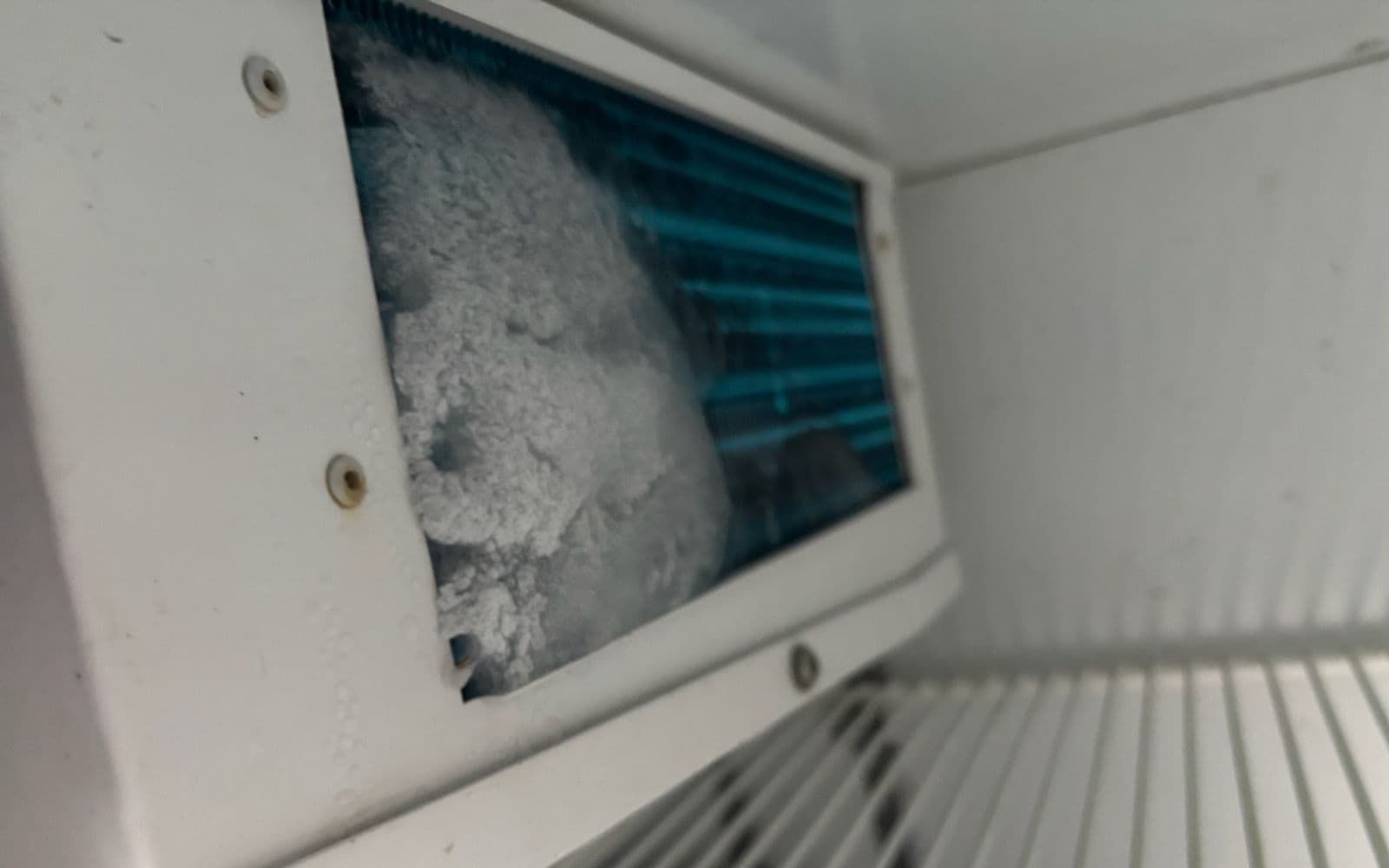
All the ice in a cool room starts as water in the air. Every time the door opens, warm air comes in carrying moisture. The coldest surface in the room is the evaporator coil, the finned block behind the fans, so that is where the moisture ends up, as frost. A little frost is normal. The system is built to melt it off on a regular defrost cycle and drain the water away.
Trouble starts when frost builds faster than the defrost can clear it, or when the defrost stops working. Frost turns to ice, the ice blocks the air through the coil, the room stops getting cold air, and the temperature starts to climb even though the system sounds like it is working flat out. By the time most people notice, the coil looks like a block of ice with fans attached.
The ice is never the fault. It is the result of something else, and the useful thing is working out what.
Too much warm, wet air getting in
What you see: frost that builds evenly over the whole coil, heaviest after busy days. Often ice around the door frame too.
Why it happens: more moisture is coming in than the system was set up for. A door that does not close on its own, a torn seal, a strip curtain with missing strips, or a door propped open during a delivery all let damp air pour in. Long, wet stretches of weather make it worse.
What helps: fix the door first. Seals and closers are small parts and they make a big difference. Get deliveries in and the door shut. This is the cause owners can do the most about themselves.
The defrost is not doing its job
What you see: ice that keeps building day after day, even when the door is behaving. Sometimes the bottom of the coil or the drain tray is solid while the top is clear.
Why it happens: the defrost depends on a few parts working together. There is a controller or timer that starts it, usually heaters or another method that warms the coil, and a sensor that ends it. If any of those fail, defrosts get shorter or stop, and the frost never fully clears.
What helps: this one needs us. It involves the electrical side of the system and the controller settings.
The drain is blocked
What you see: water on the floor under the evaporator, ice building up in the drain tray, sometimes icicles hanging from the unit, or a drip landing on stock.
Why it happens: the water from each defrost has to leave the room through a drain line. If that line is blocked, or its heater has failed where it runs through the cold space, the water sits in the tray, turns back to ice and grows with every defrost until it reaches the coil.
What helps: keep stock out from under it, wipe up water so nobody slips, and tell us about it when you call.
The fans have stopped or slowed
What you see: ice that builds quickly, often in one area. One fan still, or turning slowly while the others spin.
Why it happens: the fans pull room air through the coil. If one stops, that part of the coil gets colder than it should and ice forms quickly. Fans also suffer when stock is stacked hard against the front of the evaporator.
What helps: keep boxes clear of the fans. A failed fan motor is a common repair and usually a straightforward one.
The system is short of gas
What you see: frost in a patch near where the pipe enters the coil, rather than over the whole face, along with a room that will not get down to temperature.
Why it happens: when a system has lost refrigerant through a leak, the pressure in the coil drops and part of it runs much colder than designed. Ice forms there first.
What helps: finding the leak, not just adding gas. We have written about why in refrigerant changes for cool room owners.
What not to do
- Don't chip or scrape at the ice with a knife or screwdriver. The fins and tubes are thin, and a hole in the coil lets refrigerant out and turns a small repair into a big one.
- Don't open covers on the evaporator or the condensing unit. There is mains power and moving fans inside.
- Don't keep turning things off and on to see what happens. If we ask you to switch something off over the phone, we will tell you exactly what.
What to do while you wait
First, check the food. Food Standards Australia New Zealand says potentially hazardous food must be kept at 5°C or colder, and the way to know is a probe thermometer in the food itself, not the display on the wall. If the room is climbing, move high risk stock to another fridge or cool room if you have one.
Keep the door shut as much as you can. Note what the display reads and when you first noticed, and whether the problem came on suddenly or has been building for a while. That helps us bring the right parts.
If ice is a regular visitor, a service before summer is the best time to find out why. Our pre-summer cool room checklist covers the checks worth doing yourself, and you can read more about our refrigeration work. To book a visit, get in touch or ring 0417 734 206.
Mick McDonaldSPA Refrigeration & Air Conditioning
Want a hand with yours?
We install and service heating, cooling and refrigeration across Central Victoria from our base in Hepburn.