17 July 2026 · 5 min read
What to check when a cool room warms up
Safe checks to run before you call when a cool room starts climbing, in the order we would run them, plus what to leave alone.
By Mick McDonald, SPA Refrigeration
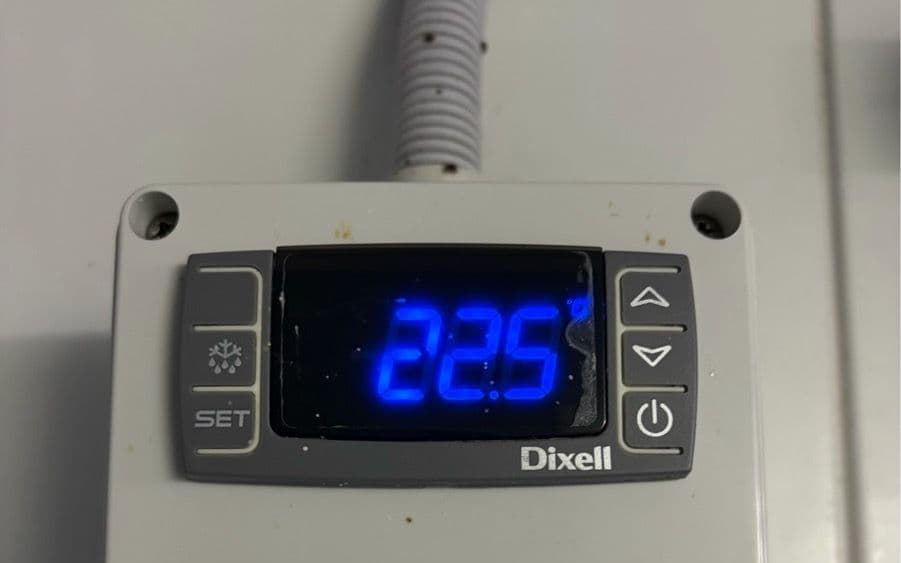
When a cool room display starts creeping up, the first instinct is to reach for the phone. That is the right instinct, but five minutes of looking first will often either fix the problem or tell us exactly what to bring. Every check below is safe for an owner or a staff member. None of them involve opening a cover, touching pipework or going near the switchboard.
Work through them in order. The first one matters most.
1. Check the food, not the display
The number on the wall is the air temperature where the sensor sits. It is not the food. Food Standards Australia New Zealand says potentially hazardous food, such as meat, fish, dairy, eggs and cooked rice, must be kept at 5°C or colder, and that a business handling it needs a probe thermometer that is accurate to within 1°C either way.
Probe a few items: one near the door, one at the back, one on the top shelf. If the food is still cold, you have some time. If it is climbing, move the highest risk stock to another fridge or cool room now, before you do anything else. Follow your own food safety program on what to keep and what to throw out.
2. Look at the door
A lot of warm cool rooms come down to the door, so start there.
- Is it fully shut? A box, a mat or a pallet edge in the doorway will hold it open just enough.
- Does it close on its own when you let it go?
- Is the seal torn, split or hanging off in a section?
- Is there frost or water around the frame?
- Has it been propped open for a delivery or a clean-up?
A door that has been ajar overnight can explain everything. Shut it properly and watch the display over the next half hour.
3. Check it has power
Look at the controller display on the outside of the room. Is it lit? Are there any alarm lights or messages? Write down exactly what it shows, including any letters or codes. That is one of the most useful things you can tell us.
Don't open the switchboard or the controller to look for the problem. If the display is dead, or other equipment on the same wall has also stopped, tell us. We do our own licensed electrical work and will check it safely when we arrive.
4. Listen to the evaporator
Step inside and look up at the evaporator, the unit with the fans near the ceiling.
- Are the fans turning? Is one stopped while the others run?
- Can you feel cold air coming off it?
- Is stock stacked right up against the front of the fans?
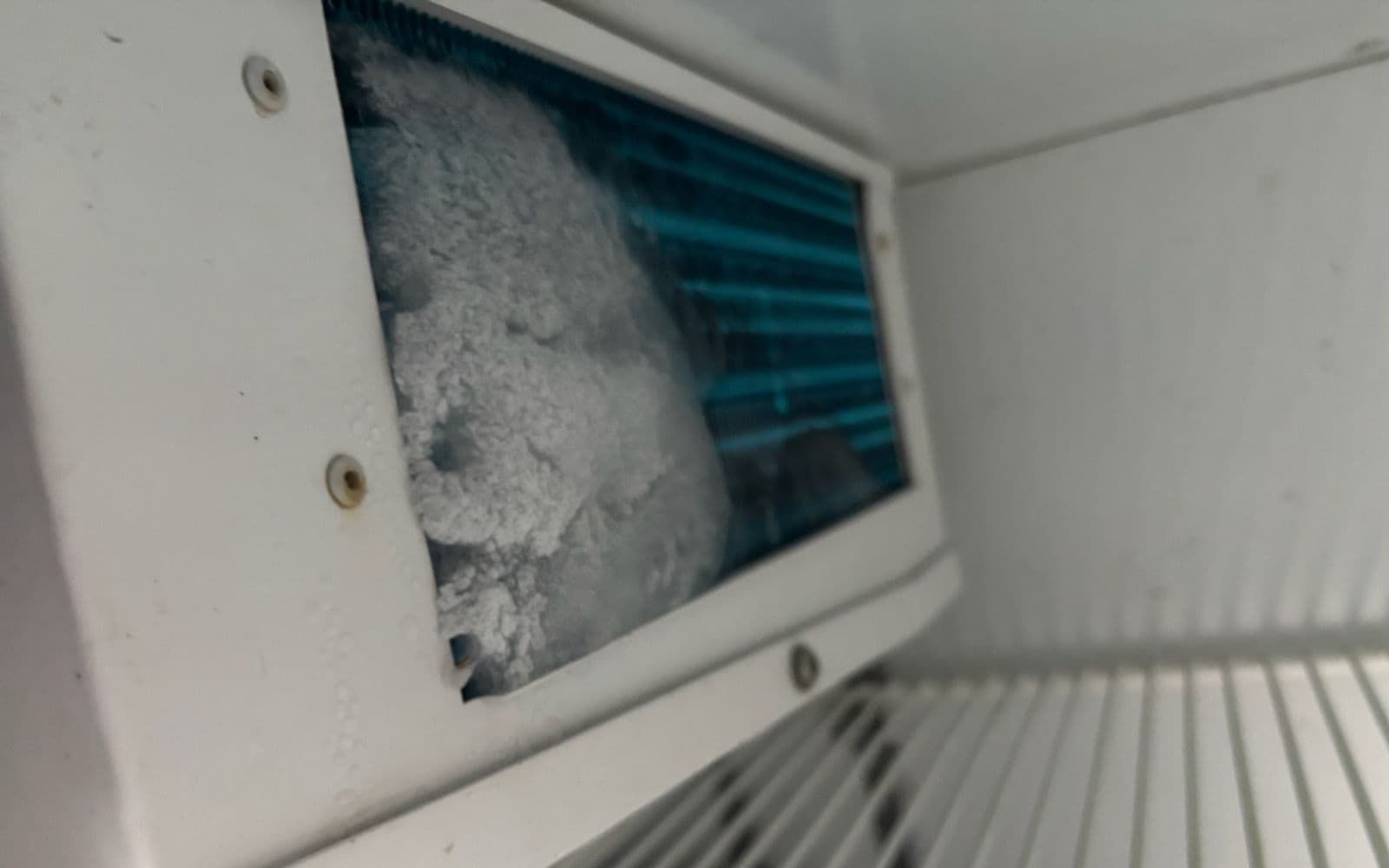
- Is the coil behind the fans covered in heavy ice?
Move any stock that is blocking the air. If the coil is a solid block of ice, don't scrape at it. A knife or screwdriver can puncture the coil and let the refrigerant out. We cover what causes heavy ice in why a cool room ices up.
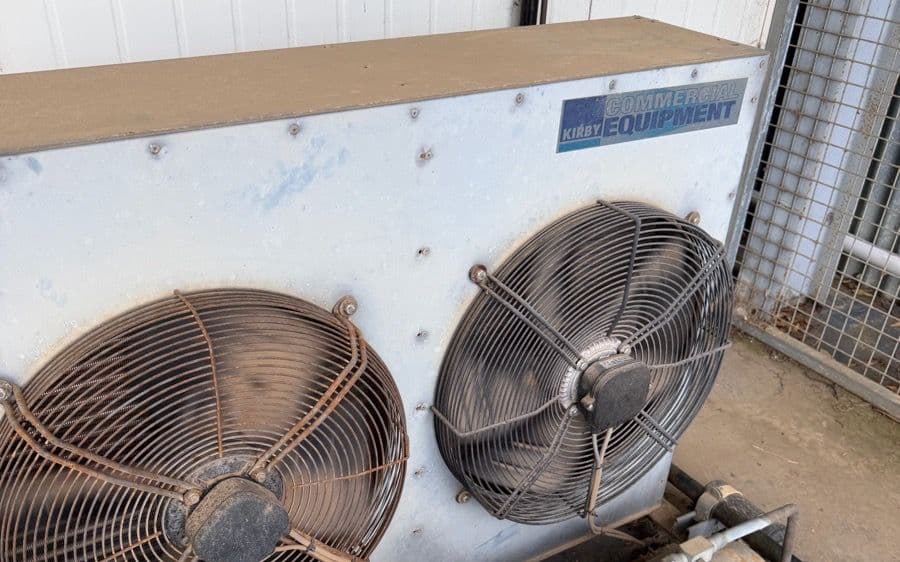
5. Look at the condensing unit outside
The condensing unit is the part outside that throws away the heat. Go and look at it, without opening anything.
- Is it running? You will usually hear it and see the fan turning.
- Is warm air coming out of it?
- Are the fins packed with leaves, dust or cobwebs?
- Is anything stacked against it, or has something been built around it?
- Is it sitting in full afternoon sun on a hot day?
Clear anything loose from around it by hand. Leave the coil, the fan and the covers to us. A unit that is completely silent while the room is warm is worth mentioning straight away.
6. Check the floor and the drain
Water on the floor under the evaporator, ice in the drain tray or a steady drip are signs the defrost water isn't getting away. Keep stock out from under it and mention it when you call.
7. Write it down and ring
By now you will know a lot. When you call, tell us:
- What the food and the display read, and roughly when it started climbing.
- What the controller shows, including any codes.
- Whether the fans inside and the unit outside are running.
- Anything unusual: noises, ice, water, a door that won't close.
With that, we can often narrow the fault before we leave the workshop and bring the parts most likely to be needed.
What to leave alone
- Covers on the evaporator, condensing unit, controller or switchboard. There is mains power and moving fans behind them.
- Refrigerant pipes, valves and service ports. Handling refrigerant needs a licence, and the gas can cause burns.
- The controller settings. Turning the set point down rarely helps a warm room and can cause icing.
Repairs are charged as a service call: the call-out, the time on site and any parts. We hold an ARCtick refrigerant handling licence and are fully insured. If the same thing keeps happening, a service before the hot months is worth it, and our pre-summer cool room checklist covers what to do yourself.
If your cool room is warming up, get in touch or ring 0417 734 206, Monday to Friday, 8:00am to 4:30pm, and we will book you into a window on a set day. You can read more about our refrigeration work.
Mick McDonaldSPA Refrigeration & Air Conditioning
Want a hand with yours?
We install and service heating, cooling and refrigeration across Central Victoria from our base in Hepburn.