
25 October 2026 · 5 min read
Running your cooling off your own solar
Solar peaks around midday and the house peaks late in the afternoon. How to line the two up so more of your cooling runs on your own power.
By Mick McDonald, SPA Refrigeration
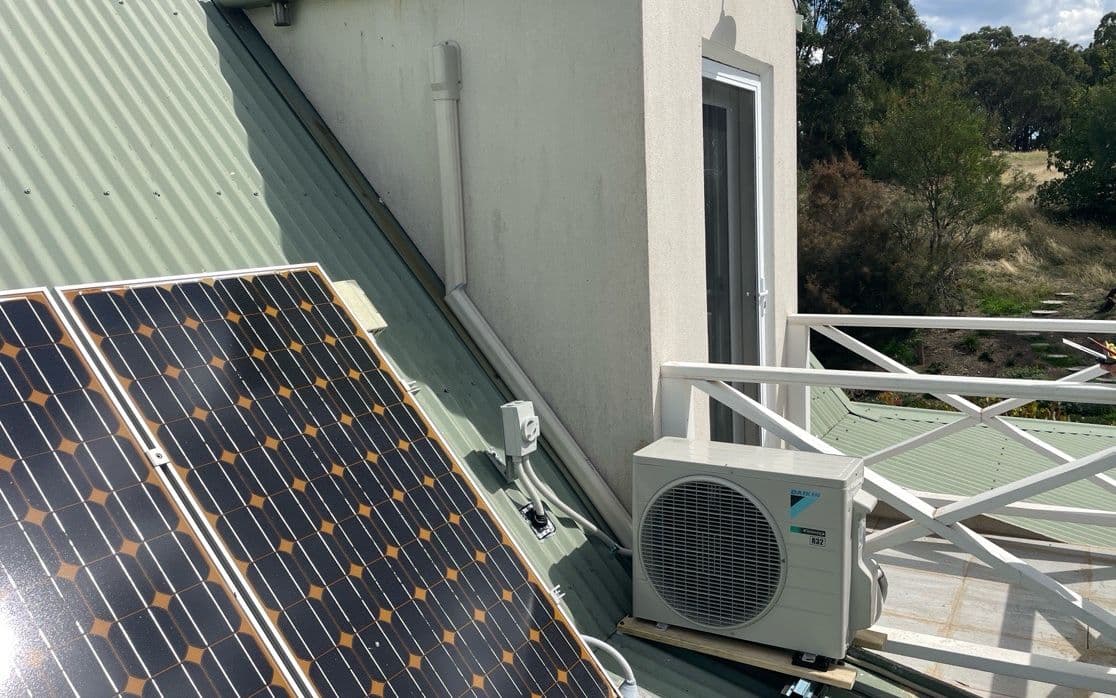
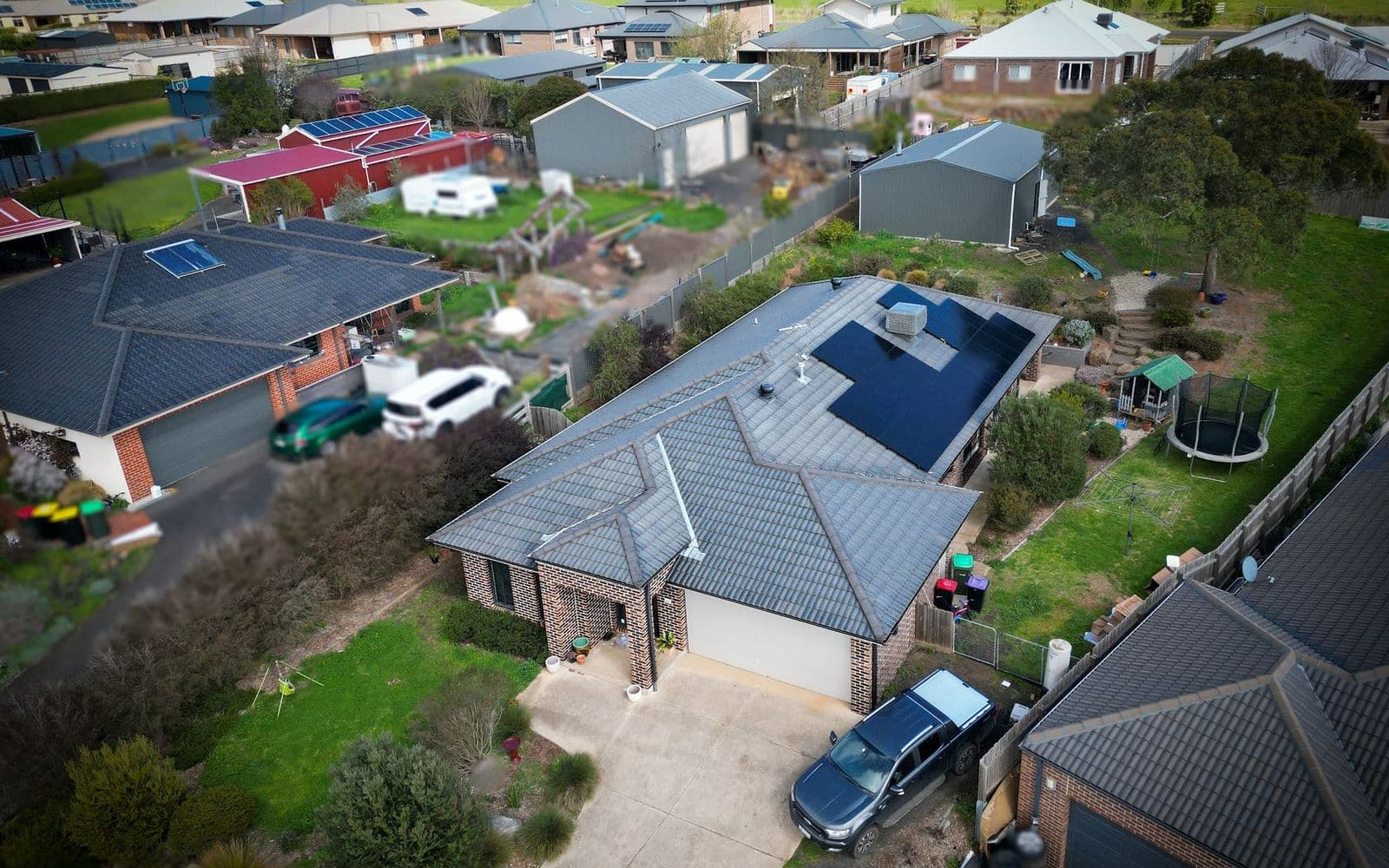
Rooftop solar does its best work when the sun is high. Houses get hottest later, in the late afternoon and into the evening, just as the panels start to fade. Wasim Saman, an emeritus professor of sustainable energy engineering at the University of South Australia, made the same point in The Conversation. That gap is most of the story when you want to cool a house off your own panels.
We don't get Brisbane summers in the ranges, but a run of hot days will still turn a closed up weatherboard in Castlemaine or Daylesford into an oven by teatime. If you have panels and a reverse cycle system, a few habits make a real difference to how much of that cooling runs on your own power.
Why your own power is worth more now
Victoria no longer has a minimum feed-in tariff. The Essential Services Commission stopped setting one from 1 July 2025, and retailers now set their own, with zero cents as the only floor. What you are paid for exporting depends entirely on your plan, and on some plans it is very little.
Power you use at home is different. Every kilowatt hour your air conditioner takes from your own panels is one you don't buy from the grid later at the retail rate. So the aim is simple: put more of your afternoon solar into the house, and less onto the wires.
Know what your system actually draws
The size printed on an air conditioner is its cooling output, not what it pulls from the wall. Renew, the not for profit behind Sanctuary magazine, explains that the electrical draw is roughly the rated output divided by about three to five, depending on how efficient the unit is. Their example is a 6 kW unit working at three to one, which draws about 2 kW at most.
The Conversation piece puts the average Australian rooftop system at about 6 kW, with new systems averaging close to 10 kW. On a clear afternoon there can be room for a split system running steadily alongside the rest of the house. A large ducted system working hard on a 38 degree day is another thing, and some of that will come from the grid whatever you do.
Start earlier than you think
The most useful habit is pre-cooling. Turn the system on while the panels are still producing well, instead of waiting until you walk in at six and find the lounge at 30 degrees. Saman's advice is the same: turn the air conditioner on earlier in the day while the sun is shining.
A few practical points:
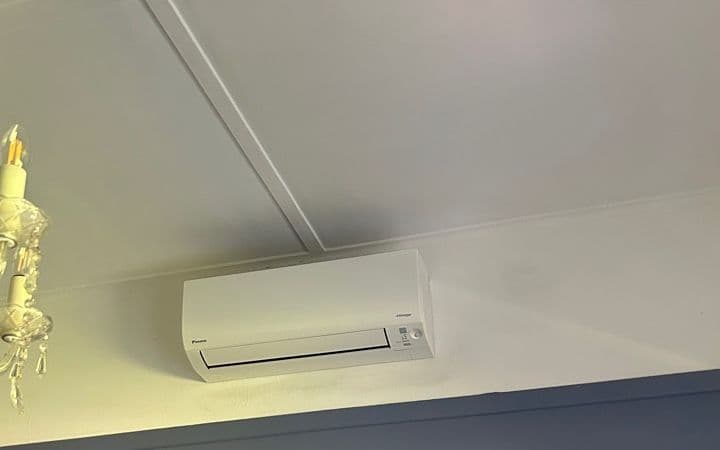
- Set a start time in the timer or the app so it runs while you are out. Most of the brands we install offer Wi-Fi control, and we covered that in Wi-Fi control for your split system.
- Cool to a sensible setting. The federal Energy Rating calculator suggests 25 to 27 degrees in summer, and says each degree lower can add about 10 percent to your electricity bill.
- Close the doors to rooms nobody is using, so the system cools the space you actually live in.
- Let it hold the temperature through the afternoon. Pulling a hot house down from scratch at dinner time is exactly the work you want to avoid doing on grid power.
Make the house hold the cool
Pre-cooling only works if the house keeps the coolness once the sun drops. Renew lists what matters: insulation in the ceiling, walls and floor, good window coverings, outside shading (most of all on west and north facing windows) and a house that is reasonably airtight. Saman makes the same point, that well insulated homes with light coloured roofs ride out a heatwave better and need less cooling.
In older cottages around Hepburn Springs and Daylesford that usually means drawing the blinds on the west side before lunch and dealing with the obvious draughts under doors. It costs very little, and it is what makes the afternoon's cooling last into the evening.
Watch where the power is going
You can't use surplus solar well if you can't see it. Renew suggests an in home display or energy monitor, which normally shows a negative figure when the house is exporting. If you see a big export figure at two in the afternoon on a hot day and the house is already warm, that is power you could be putting into cooling instead.
Where a battery fits
A battery stores daytime solar for the evening, which is exactly when cooling demand keeps going after the panels stop. Renew notes it needs enough capacity to be useful for cooling, and that it is a much bigger decision than changing a timer. The timer is the place to start.
The right system for the job
All of this is easier with a system sized properly for the rooms it serves and kept clean. A blocked filter makes any unit work harder, solar or not, which is one reason we suggest a regular service. If you are adding cooling to a house that already has panels, tell us when we come out to measure up, and we'll keep the afternoon load in mind when we talk through a split system or ducted. If you are on the Midday Power Saver, our piece on midday power and your air conditioner covers how that changes the timing.
If you'd like a hand working out how your cooling and your solar fit together, get in touch or ring us on 0417 734 206 during business hours.
Mick McDonaldSPA Refrigeration & Air Conditioning
Want a hand with yours?
We install and service heating, cooling and refrigeration across Central Victoria from our base in Hepburn.