
22 August 2026 · 4 min read
Replacing old gas ducted heating, and whether the ducts can stay
When an old gas ducted heater goes, can a reverse cycle unit use the same ducts? What we check, and why the regulator says to look hard.
By Mick McDonald, SPA Refrigeration
Short answer: sometimes. Longer answer: the ducts that suited a gas heater were designed for a different job, and reusing them without checking is how people end up with a new reverse cycle system that never feels as good as it should.
We get asked this a lot, often by someone whose gas ducted unit is twenty years old and making noises. Here is what goes into the answer.
Why gas ducts are not automatically right
A gas ducted heater pushes out very hot air in fairly small volumes. A reverse cycle unit heats with air that is warm rather than hot, so it moves more of it to deliver the same heat. In summer it does the opposite job and pushes cool air, which is heavier and harder to spread around a room.
The federal Your Home guide notes that ducts need to be larger if they are also used for cooling. A duct sized for a gas heater may be too small for reverse cycle, especially on the long runs to the far bedrooms.
There is also condensation. Cool air in a duct running through a warm roof space on a summer afternoon will sweat if the duct is poorly insulated or sealed. Your Home sets out a minimum insulation level of R1.5 for ducts carrying cooling, with joints sealed.
What the regulator says
This is not just a tradie's view. The Essential Services Commission, which runs the Victorian Energy Upgrades program, says in its activity guide (version dated 15 April 2026) that when replacing ducted systems, and gas ducted in particular, it recommends the ductwork and fittings be replaced, because reused ducts can leave the new system working poorly. It expects installers to replace ducts and fittings that are not suitable for reuse, giving undersized and degraded ductwork as examples. It also warns that not giving customers clear and accurate information about suitability can be a breach of the program's code of conduct.
So if an installer says "the ducts are fine" without having looked in the roof, ask them what they checked.
What we check
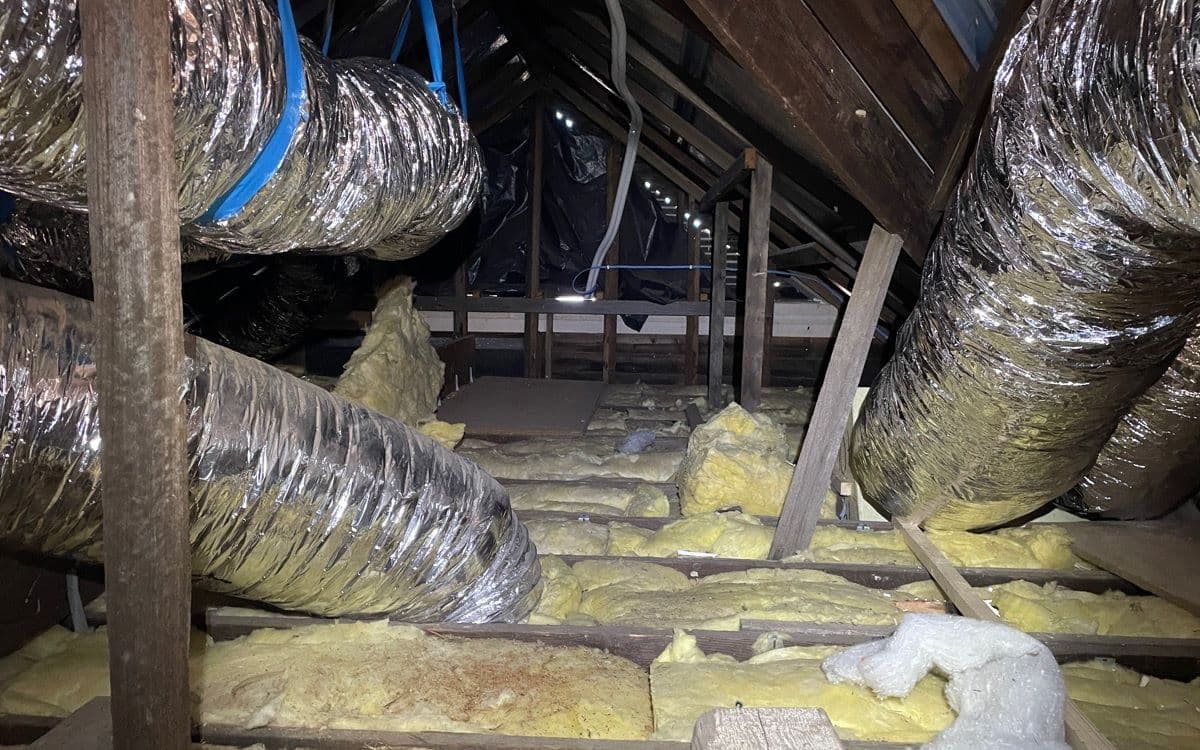
When we look at an old gas ducted system, we go up into the roof or under the floor and look at:
- Size. Each run measured against the air the new system needs to push to that room, for heating and for cooling.
- Insulation. Older flexible duct often has thin insulation that has slumped or torn. Rodents like it too.
- Condition. Crushed sections, sagging runs with tight bends, disconnected joints and taped repairs.
- Where the outlets are. Many older gas systems around here blow through floor vents. Floor outlets are good for heating and poor for cooling, so a house that wants proper summer comfort may be better with new ceiling outlets.
- The return air. Its size and position, and whether air can get back to it from every room.
- The zones. Whether the old layout suits how the house is used now. Zoning is covered in how many zones a ducted system needs.
Sometimes the main trunks are fine and only some branches need replacing. Sometimes the whole lot comes out. Occasionally, on a solid, well insulated system with ceiling outlets, most of it can stay. We tell you which, and why.
Don't forget the gas side
When the gas heater comes out, its gas supply has to be capped by a licensed gasfitter. If the heater is the last gas appliance in the house, you may also be able to get rid of the gas connection and its daily supply charge. That has its own steps, covered in going all electric and dropping the gas connection.
The VEU side
Replacing a ducted gas heater that is the main heating with a high efficiency ducted reverse cycle system is one of the Victorian Energy Upgrades activities. An accredited provider applies the discount, and the amount varies by provider and product. Two things to know at the time of writing:
- The gas heater must still be connected to gas before it is decommissioned, unless it was disconnected for safety reasons, and the provider photographs it in place with the gas pipe capped afterwards. Do not have it pulled out before the provider is involved.
- The Essential Services Commission has published that the minimum co-payment for a ducted system rises from $1,000 to $3,000 including GST from 30 September 2026.
The program also has a separate activity for replacing gas heating ductwork with new insulated ductwork that meets set standards. Whether any of this applies to your job is the accredited provider's call, but we can tell you which scenario your house looks like. See the VEU discount for replacing gas heating for the detail.
What it means for the price
New ducts cost more than reusing old ones, and that is exactly why the question deserves a proper look rather than an assumption. We measure the house and the ductwork, then quote the system with the ducting we think it needs, and explain what we kept and what we did not.
To book a look at your system, use our contact page or ring 0417 734 206, Monday to Friday, 8:00am to 4:30pm. More on what we install is on our ducted page.
Mick McDonaldSPA Refrigeration & Air Conditioning
Want a hand with yours?
We install and service heating, cooling and refrigeration across Central Victoria from our base in Hepburn.