
14 August 2026 · 5 min read
Mitsubishi Electric split systems in a cold winter
How Mitsubishi Electric wall splits handle heating in the cold, what the specs and energy label actually tell you, and how to choose for the ranges.
By Mick McDonald, SPA Refrigeration
In the ranges around Daylesford, Trentham and Hepburn, a split system earns its keep in winter, not summer. Sustainability Victoria's heating cost guidance says to multiply Melbourne heating costs by about 1.5 for a cold climate like Ballarat, and our towns sit in that kind of climate. So when people ask us about Mitsubishi Electric wall splits, the real question is usually how they heat when it is properly cold outside.
Here is what Mitsubishi Electric Australia publishes, and how we read it.
What "minus 15" means
On the product pages for its MSZ-AP and MSZ-LN wall series, Mitsubishi Electric lists a guaranteed outdoor operating range for heating of minus 15 to 24 degrees. Cooling runs from minus 10 to 46 degrees.
That minus 15 figure tells you the system is designed to keep heating at that outdoor temperature. It does not tell you how much heat you get there. Like every heat pump, a split system gathers heat from the outside air, and the colder that air, the harder the job. So the useful questions are how much heat it makes in ordinary cold, and whether it has enough left over for the coldest mornings.
Read the label for your zone
The national energy rating label for air conditioners has three bands of star ratings: hot, average and cold. The government's guide to the label says Melbourne is in the cold area, and that people there should read the cold ratings. Given the Sustainability Victoria guidance above, the cold band is the one to compare up here too.
Two things on the label matter most for us.
- The red stars. These are the heating efficiency ratings. Compare the red stars in the cold band, not the cooling stars and not the hot band.
- The heating output at 7 and 2 degrees. The guide explains that the label shows how much heat the unit can give at a cold 7 degrees outside and a very cold 2 degrees. The 2 degree figure is the one we watch for a bedroom that has to be warm at six in the morning.
Why a bigger unit can have fewer stars
This surprises people. On Mitsubishi Electric's own MSZ-AP page, the cold zone heating rating is 3 stars for the 2.5 kW and 3.5 kW models, and 2 to 2.5 stars for the 4.2 kW to 7.8 kW models. The MSZ-LN shows the same pattern: 3 stars at 2.5 and 3.5 kW, 2 stars at 5.0 and 6.0 kW.
That is normal for heat pumps, and it is not a reason to buy a unit that is too small. An undersized unit running flat out all evening is no bargain. It is a reason to size carefully, and sometimes to use two smaller heads in two spaces rather than one large unit trying to push heat down a hallway.
Which wall series suits what
At the time of writing, Mitsubishi Electric Australia's reverse cycle wall range includes:
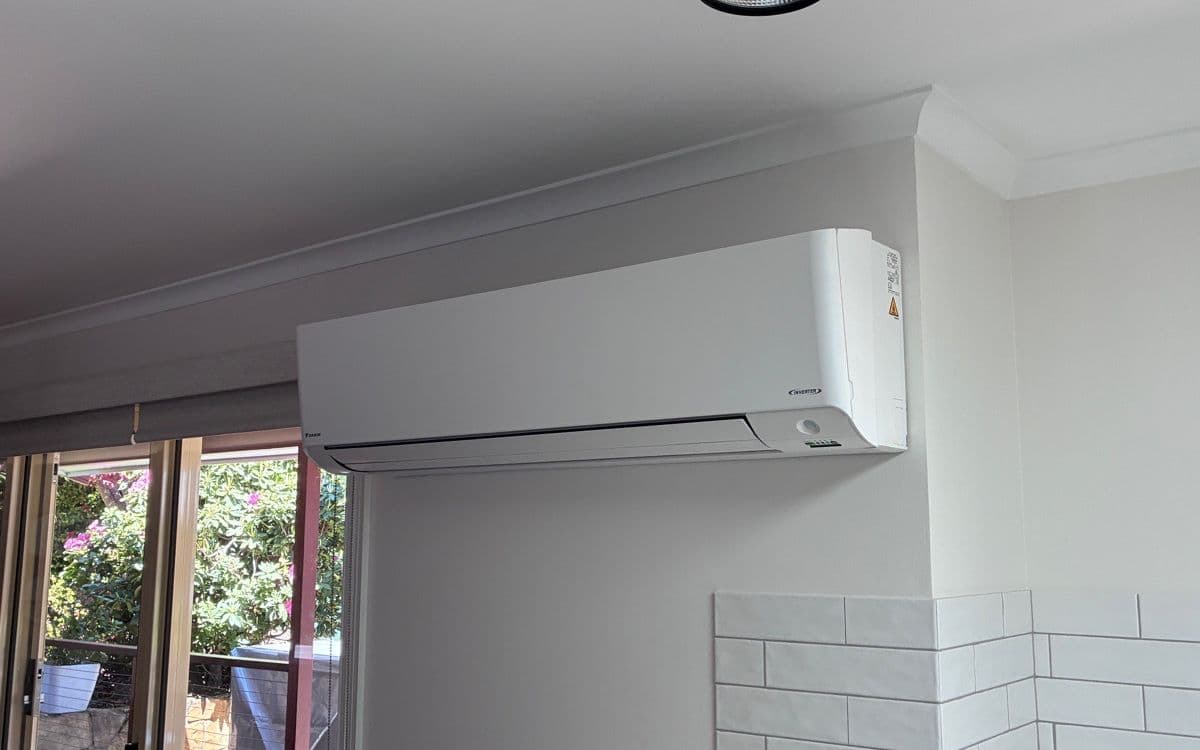
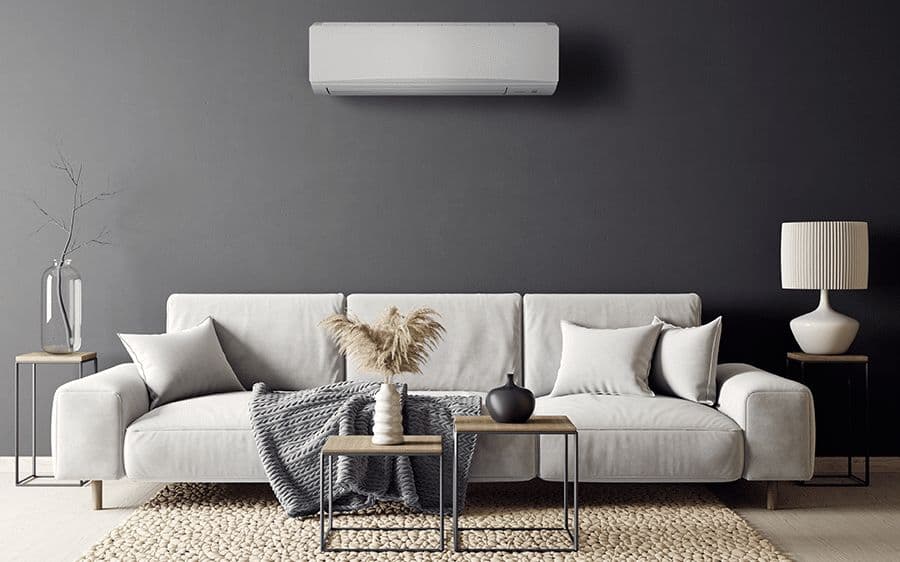
- MSZ-AP, 2.5 to 7.8 kW, R32, plus a compact 2.0 kW MSZ-AP Mini. Mitsubishi Electric quotes the 2.5 kW model as low as 18 dB(A) in heating mode. A good all rounder for bedrooms and living rooms.
- MSZ-LN, 2.5 to 6.0 kW, R32, with built in Wi-Fi and the 3D i-See Sensor. Mitsubishi Electric says the sensor reads the room's temperature in sections, directs air to where it is needed, and drops to an energy saving mode when nobody is there. That suits a living room where people come and go.
- MSZ-EF, 2.5 to 5.0 kW, R32, a slim design in three colours.
- MSZ-GS, 2.5 to 7.8 kW, with what Mitsubishi Electric calls a blue fin anti-corrosion treatment.
- MSZ-AS90, 9 kW, for a large open space.
The MSY models in the same range are cooling only, which is the wrong pick up here unless you only ever want cooling.
The install decides a lot
A few things we do on every winter-focused install:
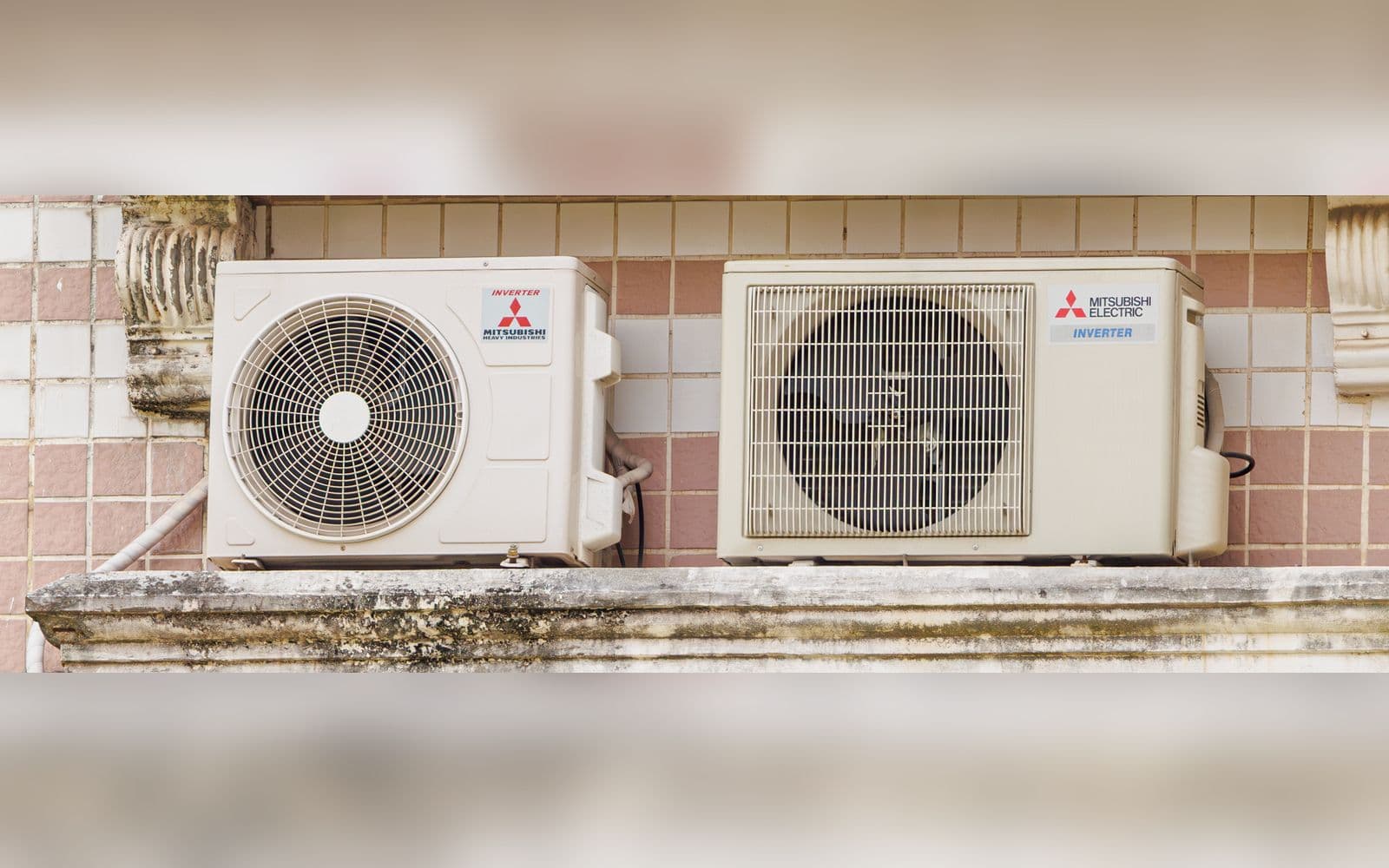
- Lift and clear the outdoor unit. In cold, damp weather the outdoor coil builds up frost and the unit stops heating for a short time to clear it. That water has to drain away. We mount outdoor units so they are not sitting in a puddle or a pile of leaves, with room around them to breathe.
- Put the head where the cold is. Air from a wall unit heads out across the room. Mounting it to blow toward the coldest wall or the doorway people come in through makes the room feel warmer at the same setting.
- Size for July, not January. We size a heating split on the room's construction, glass, ceiling height and how exposed it is, and check the low temperature output against the room's needs.
Running costs in context
Sustainability Victoria's figures for an average older Melbourne home heated to 20 degrees, at mid 2025 prices, put split system heating for a small 100 m2 home at about $513 a year, against about $1,540 for 6 star gas ducted. In our colder climate both numbers go up, but the gap is why so many people up here are adding a split. Our article on reverse cycle against gas heating has the full set.
If you are planning a Mitsubishi Electric split system for winter, or your current one is struggling when it gets cold, call us on 0417 734 206, Monday to Friday, 8:00am to 4:30pm, or reach us through our contact page.
Mick McDonaldSPA Refrigeration & Air Conditioning
Want a hand with yours?
We install and service heating, cooling and refrigeration across Central Victoria from our base in Hepburn.