
2 August 2026 · 5 min read
Daikin multi-split, one outdoor unit for several rooms
How a Daikin multi-split runs several rooms off one outdoor unit, when that suits a house in the ranges, and when separate splits make more sense.
By Mick McDonald, SPA Refrigeration
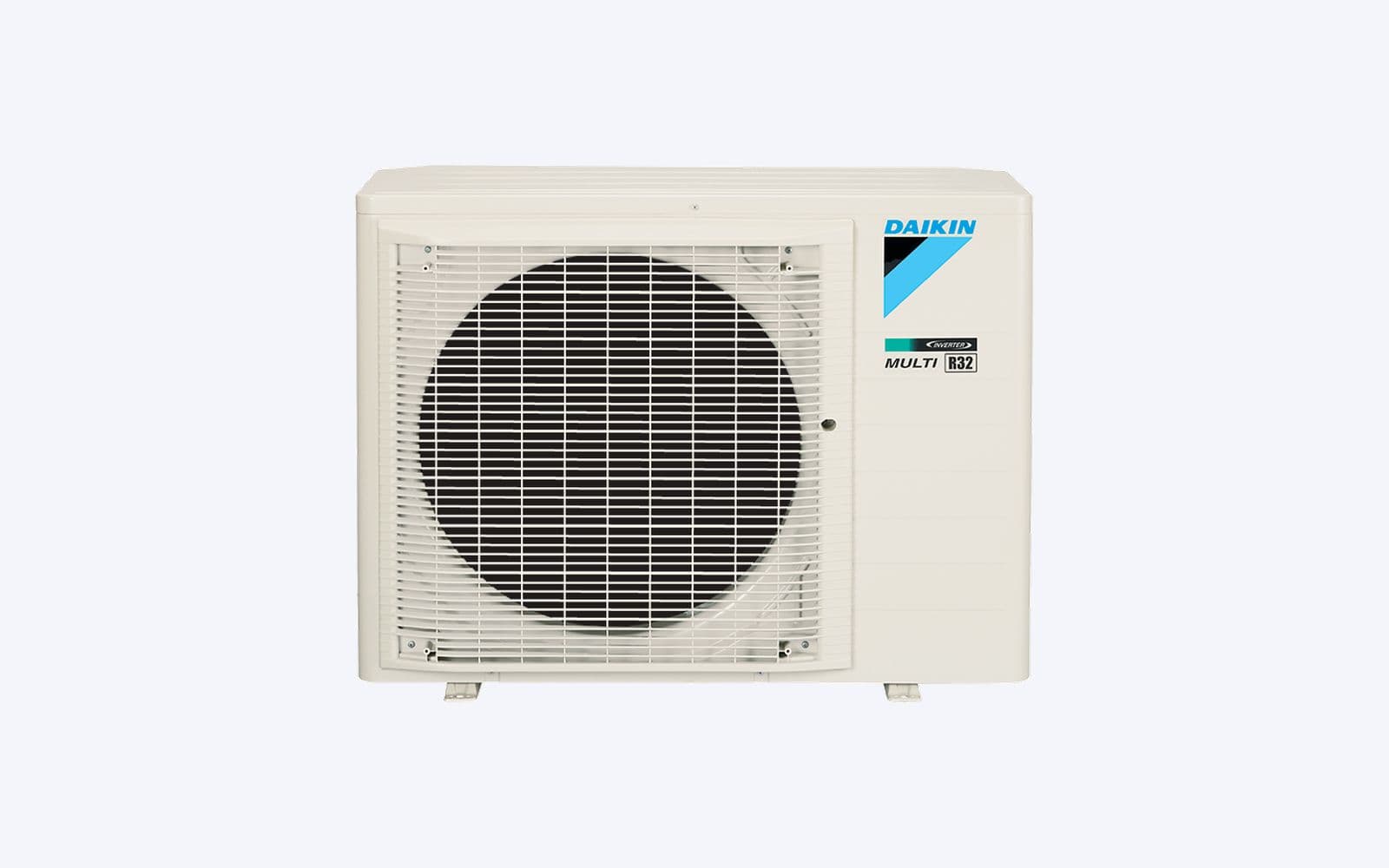
One outdoor unit on the wall instead of three. That is the pitch for a multi-split, and for the right house it is a good one. For the wrong house it is a compromise you live with for fifteen years. This is how Daikin's multi-split works, what it does well, where it falls short, and the questions we ask before we suggest one.
How it works
A multi-split connects several indoor units to a single outdoor unit through separate refrigerant pipes. Each indoor head has its own remote and its own set temperature, so the lounge can sit at 21 degrees while the main bedroom is off. Daikin says its multi-split systems are designed to run with any combination of indoor units on, and that running just one of them does no harm to performance or efficiency.
The catch is the mode. Daikin is clear that a multi-split runs in either heating or cooling, not both at once. Every head that is running has to be doing the same job.
What Daikin offers
Daikin Australia lists two families for homes.
- Super Multi NX: one outdoor unit serving up to five rooms. Outdoor capacities are 5.2, 6.8, 8.0 and 10.0 kW, reverse cycle or cooling only, on R32 refrigerant. Indoor units can be wall mounted, bulkhead, ducted or cassette.
- Multi Lite: the entry level multi range, sold alongside Daikin's Lite single splits.
For bigger homes, Daikin's VRV IV-S system can run up to 14 rooms through bulkhead or ducted indoor units.
Two Super Multi NX features are worth knowing about in a cold climate. Heat Plus lets the wall mounted heads warm a room quickly with 60 degree air for 30 minutes. Priority Room lets you shift up to half the capacity from the other rooms to the one that matters most. Daikin notes the priority room is chosen when the system is set up after installation, so tell your installer which room that is.
When a multi-split suits
- Not much wall for outdoor units. A townhouse, a narrow block or a heritage front where three boxes on the wall would look wrong.
- Rooms that are used at different times. Living areas by day, bedrooms at night, each switched on only when needed.
- Mixed room types. A wall head in the bedroom, a bulkhead in the hallway and a ducted indoor unit tucked out of sight can all share one outdoor unit.
- Planned extras. Daikin points out a multi can suit future expansion, as long as the outdoor unit has the capacity for it.
When separate splits make more sense
- You want one room heating while another cools. A multi cannot do it.
- Heating is the main job in every room. Separate splits each bring their own full outdoor unit to the problem. On a frosty morning with every head calling for heat, a shared outdoor unit is sharing its capacity.
- You want to spread the risk. One outdoor unit is one thing to fail. If it stops, every room on it goes cold together.
- Cost. Daikin's own FAQ lists a higher upfront cost than a single split as a disadvantage, and notes expansion is limited by the outdoor unit's capacity.
- Long or awkward pipe runs. Every head needs its own pipes back to the one outdoor unit, so the outdoor position matters more than it does with single splits.
If most of the house needs heating at once, ducted reverse cycle with zoning is often the better fit. Our piece on sizing ducted for a cold climate goes through that, and our ducted page covers the options.
Who can install one
This one surprises people. The Australian Refrigeration Council issues a restricted licence for single head split systems, and its fact sheet says the holder of that licence is not permitted to install multi-head split systems or to service and repair any split system. Multi-head work needs the full refrigeration and air conditioning licence. Daikin's own advice is that professional installation is strongly recommended to meet Australian standards and to keep your warranty. Daikin's 5 year parts and labour warranty covers multi splits bought and installed in homes in Australia, and it does not cover faults caused by incorrect installation.
Looking after it
Daikin's maintenance advice for a multi is the same as for any split: clean the indoor filters regularly, keep the outdoor unit clear of leaves and rubbish, and have it professionally serviced each year. With that, Daikin says its systems can last 10 to 15 years or more. With one outdoor unit doing several rooms' work, keeping that one unit clean and serviced matters more than usual. We do this as part of our repairs and maintenance work.
The questions we ask first
- Which rooms need heating at the same time on a cold morning?
- Is there a good spot for one outdoor unit that keeps the pipe runs reasonable?
- Will anyone want to cool one room while heating another?
- Are there more rooms to add later?
If the answers point to a multi-split, it can be a tidy solution. If they point elsewhere, we will say so. You can read more about single heads on our split systems page.
If you would like us to look at the house and suggest a layout, call 0417 734 206, Monday to Friday, 8:00am to 4:30pm, or get in touch. We measure up and quote before anything is ordered.
Mick McDonaldSPA Refrigeration & Air Conditioning
Want a hand with yours?
We install and service heating, cooling and refrigeration across Central Victoria from our base in Hepburn.